The direct answer
FBA-ready toy packaging begins with the buyer's current marketplace and fulfillment instructions. The manufacturer can apply labels and pack goods to an agreed plan, but the buyer must provide the correct product identity, label format, placement, carton limits and delivery workflow before bulk packing.
01 / Buyer action
Start with the buyer decision
FBA-ready toy packaging begins with the buyer's current marketplace and fulfillment instructions. The manufacturer can apply labels and pack goods to an agreed plan, but the buyer must provide the correct product identity, label format, placement, carton limits and delivery workflow before bulk packing. Collect the current fulfillment instructions, SKU list, barcode and label assets, retail package requirements, carton limits, destination details and warehouse handover dates. Keep marketplace requirements separate from destination-market product obligations; both need to be confirmed for the final product route. For FBA-ready toy packaging, the buying team should turn the initial idea into a decision record before requesting urgency from the factory. Record the customer promise, the intended channel, the target market, the expected order quantity and the person empowered to approve changes. This gives commercial, creative, sourcing and quality colleagues one shared starting point. It also prevents a supplier from treating a reference image or an early call as a final instruction. When the brief is incomplete, identify the missing decision, who owns it and what evidence will resolve it rather than filling the gap with an assumption. A useful project brief also gives the supplier permission to say what is not yet feasible. For FBA-ready toy packaging, ask the factory to identify the decision that controls the rest of the route: an owned character file, material choice, product size, package format, target-market requirement or order-volume assumption. The buyer can then decide whether to resolve that point before quotation, ask for two commercially distinct options or adjust the launch plan. This approach is more reliable than demanding a fixed answer while the physical product and commercial scope remain uncertain. It turns the first conversation into a practical plan for evidence, owners and next actions.
- Identify the customer, channel, target market and commercial decision owner.
- Separate fixed buyer requirements from options the supplier may propose.
- Use a version-controlled brief before requesting a quotation or sample.
02 / Buyer action
Ask for evidence that matches the final SKU
Use a physical pack-out sample to confirm label placement, barcode readability, retail-pack protection, inner-pack logic and master-carton markings. The factory should work from a controlled version of the buyer's instruction file. If labels or carton rules change, issue a new version before the packing line begins. The most useful evidence is specific enough to be challenged. A buyer should be able to ask which product version an example represents, which material or process was used, which packaging configuration was inspected and what remains different from the planned SKU. Keep quotations, samples, drawings, packaging proofs and inspection criteria connected to the same revision number. That discipline makes supplier comparisons fairer and means a later commercial discussion can refer back to a fact rather than a recollection. It also gives a new project stakeholder a reliable way to understand why a decision was made. When suppliers appear to offer similar solutions, compare the decisions beneath their language. One may be basing the proposal on a different component, process, package structure or order quantity. Another may be treating a customer-facing detail as optional. For FBA-ready toy packaging, create a simple comparison table with the version quoted, included materials and accessories, sample scope, packaging, quality controls, document assumptions and cargo handover responsibilities. Give every proposed alternative a visible trade-off. That allows the buyer to choose on product and commercial grounds, rather than discovering a scope difference after a sample or purchase order has already been approved.
- Request comparable product evidence, not only generic catalogue images.
- Ask suppliers to state assumptions, exclusions and the proposed production route.
- Keep product, packaging and market assumptions in the same project record.
03 / Buyer action
Use the sample stage as a controlled test
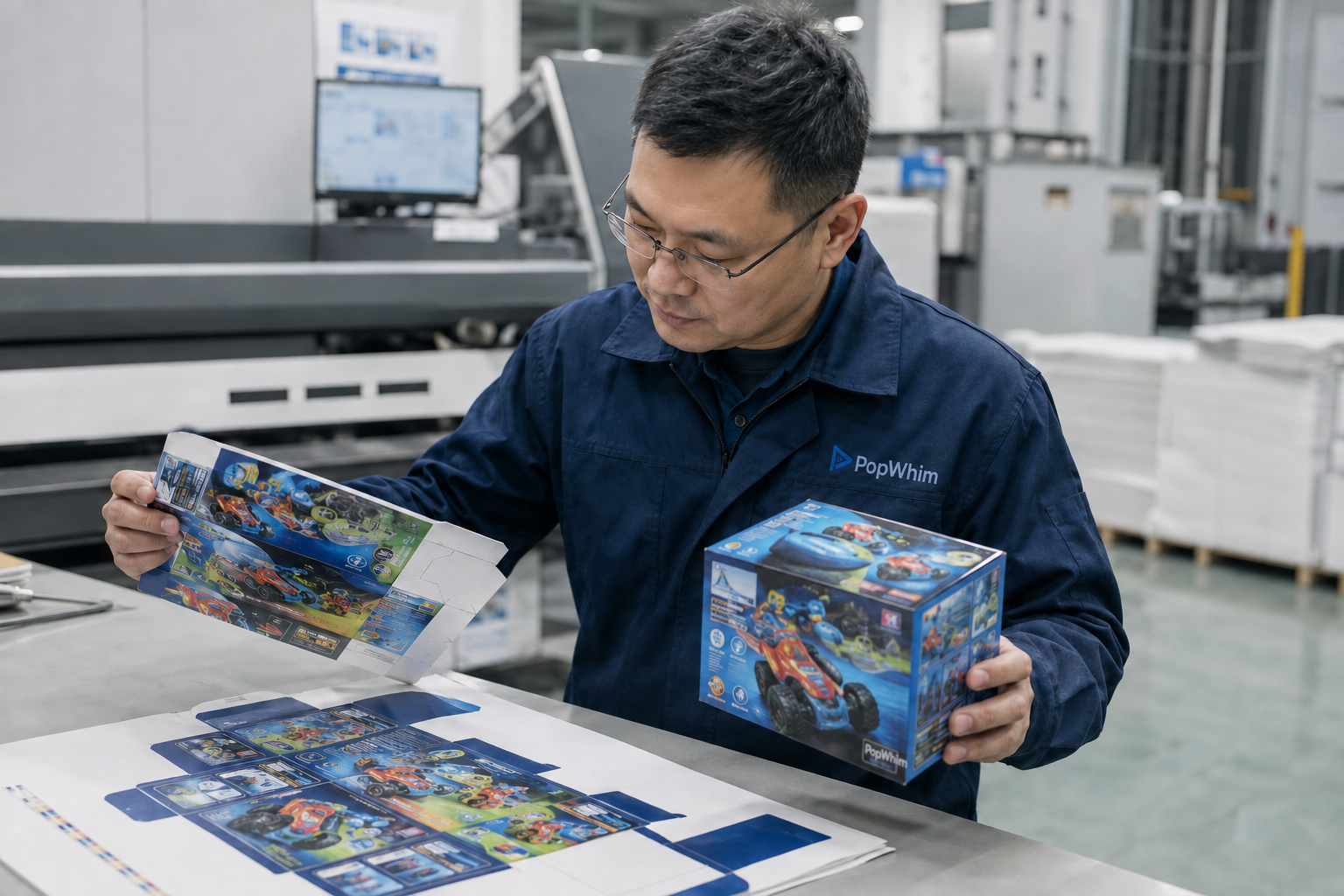
Review the prepared consumer unit and the finished carton before mass packing. Check that labels do not cover required product information and that the carton reflects the agreed SKU and quantity. Include these checks in the factory testing or shipment-inspection plan rather than leaving them to an unrecorded final step. Sampling is where a buyer learns whether the proposed route can be managed in practice. Treat each review as a release gate with a stated purpose, not simply as a request for a nicer sample. Capture the observed difference, the requested action, the owner and the expected next evidence. Where a change has implications for material, finish, safety planning, packaging, tooling, unit cost or timing, record those implications before approval. This creates a clean handover from the creative discussion to an instruction a production and quality team can follow consistently. The buyer should decide what a sample has proved and what still needs to be proved. A concept sample may validate creative direction but not production repeatability. A pre-production sample may validate materials and pack-out but not the condition of the final lot. For FBA-ready toy packaging, use a short release note at each stage that states the sample's purpose, the accepted features, any tolerated deviation and the next evidence required. It creates a traceable path from an early concept to the golden sample, factory testing and shipment inspection. That path helps a new buyer, project manager or inspector understand the basis of a decision without relying on an oral handover.
- Name each sample version and state its approval purpose.
- Consolidate feedback into one owner-approved change list.
- Link any material change to cost, timing, packaging and quality implications.
04 / Buyer action
Build factory testing and quality controls early
Set clear verification points for label data, placement, retail package condition, carton count, dimensions and shipping marks. The inspector should use the buyer-approved fulfillment checklist. If a warehouse or marketplace has a specific receiving process, confirm how the final packing list and labels will be reconciled before cargo handover. Quality control works best when it starts before bulk goods exist. The buyer should describe the surfaces, parts, functions, accessories, labels and pack-out details that affect customer acceptance, then define how they will be checked. Factory testing can identify issues during production, while final inspection should assess the completed lot against the approved reference. If an issue is found, the useful question is not only whether it can be reworked, but how the corrective action will be verified and whether the altered goods remain aligned with the approved product version. A quality plan is also a communication plan. The factory needs to know which deviations must stop production, which can be reworked and which can be accepted if they remain within an agreed visual standard. The buyer needs enough evidence to decide whether the finished order represents the approved SKU. For FBA-ready toy packaging, describe not only the defect but also the customer impact, the location on the product or package, the inspection method and the required response. Photographs, reference samples and clear owner names make this far more useful than abstract language such as high quality or perfect finish.
- Define customer-visible critical-to-quality points with photos where helpful.
- Use the approved sample and checklist during production and shipment inspection.
- Record deviations and corrective actions before the next release gate.
05 / Buyer action
Keep packaging and delivery connected to the product
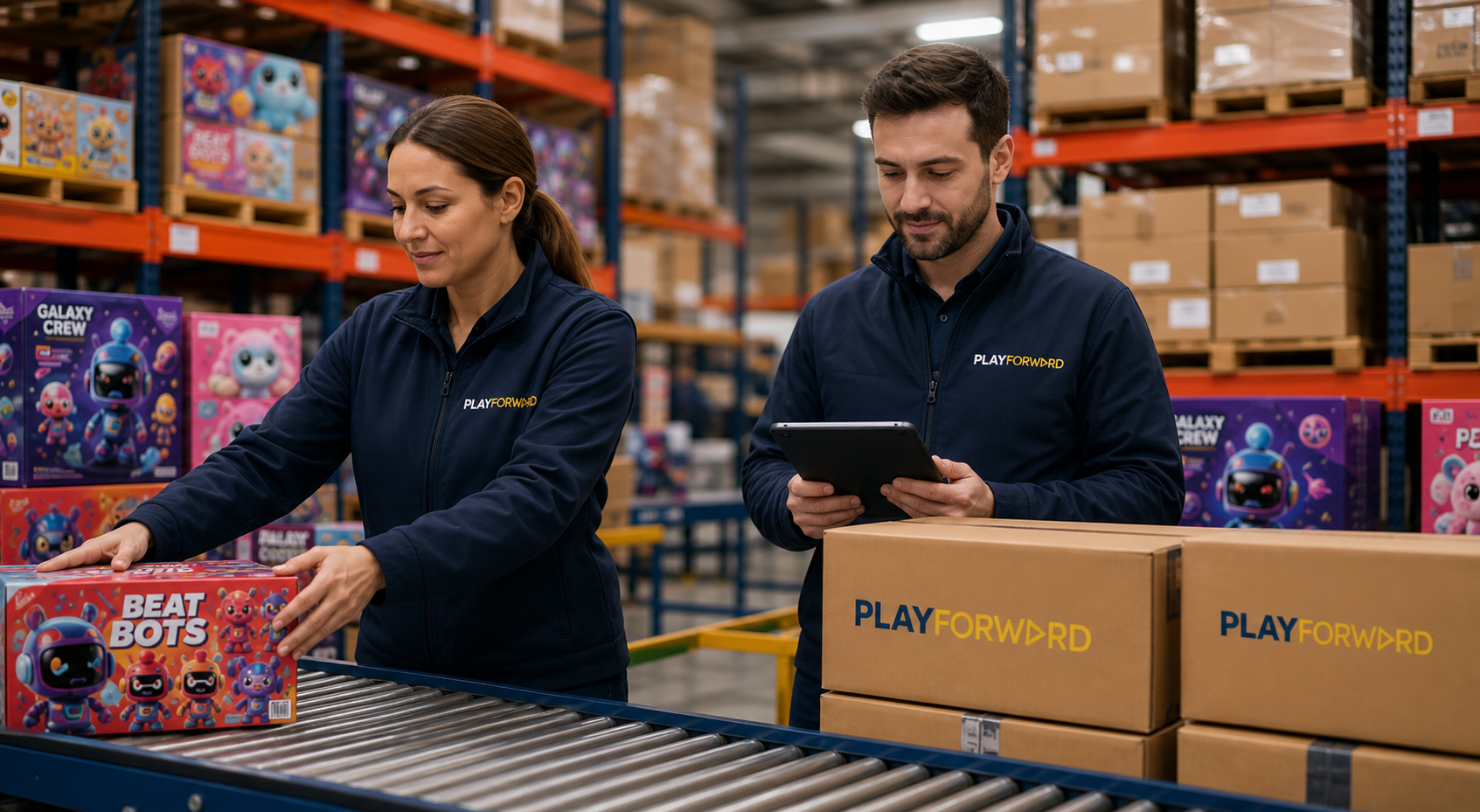
Final carton data should come from actual packed goods. Provide the nominated forwarder with the agreed information and retain the final pack-out photographs. Accurate data helps the buyer plan freight and warehouse receiving while giving the supplier a reference for repeat FBA-ready toy orders. Packaging and logistics must be treated as part of the customer product, not as a separate downstream task. The finished unit should be assessed inside its consumer pack and in the export configuration that will move through the warehouse and carrier network. Confirm accessory protection, package identity, barcodes, labels, carton count and shipping marks before the cargo release decision. Final carton information is also a commercial input: it affects freight planning, storage, receiving and later replenishment. A buyer who preserves this evidence has a much stronger foundation for a repeat order. Before cargo is released, the buying team should run a final cross-functional review. Sourcing can confirm the commercial scope, product development can confirm the approved version, quality can confirm the inspection evidence, packaging can confirm the final artwork and logistics can confirm the packed shipment data. For FBA-ready toy packaging, this review should identify any open issue, its owner and whether it changes the release decision. It is not intended to create unnecessary meetings; it prevents one team from assuming that another team has checked a detail that affects product identity, retailer receiving or customer experience. The result is a documented handover instead of a collection of partial confirmations.
- Approve the finished product inside its actual consumer and export packaging.
- Reconcile labels, accessory count, carton data and marks before handover.
- Retain packed-product photographs and final records for receiving and reorders.
06 / Buyer action
Manage commercial and operational risk
A frequent risk is applying labels from an outdated seller file or adding them after the factory has sealed cartons. Another is assuming that fulfillment preparation satisfies toy safety or market-access requirements. Control the labeling process, but confirm all product-specific obligations separately with the responsible parties. Risk is easier to manage when it is described as a decision with an owner. Keep a short register for unresolved product, rights, market, quality, packaging and shipment questions. For each one, specify what could change, what evidence is needed and who can authorize the next step. Do not use a supplier's willingness to ship as a substitute for an approved release. Where a question involves product safety, market access, customs or intellectual property, the responsible business party should obtain appropriate qualified advice for the final SKU and destination. Commercial pressure is most manageable when the buyer has already defined what cannot be traded away. If a delivery date tightens, the team can assess alternatives such as fewer variants, a simpler package, an existing platform or a revised freight route—but it should not silently remove an approval or quality-control step. For FBA-ready toy packaging, record the product promise that must remain intact and the options that can change with a documented buyer approval. This protects both the supplier relationship and the customer outcome. It also helps purchasing teams communicate a rational decision to retailers, brand owners or internal stakeholders when a trade-off is unavoidable.
- Make scope changes visible before approving production or freight.
- Escalate rights, safety and destination-market questions to qualified parties.
- Do not let a launch date bypass controlled sample, quality or shipment decisions.
07 / Buyer action
Conclusion: create a repeatable buyer process
A documented FBA-ready packing plan reduces relabeling, receiving discrepancies and avoidable product damage. It gives the buyer a clearer evidence trail from the approved retail pack to the final carton delivered into the fulfillment network. The completed order should become a source of operational learning. Compare the approved sample with inspection findings, final carton data, warehouse receiving observations and any customer feedback that is relevant to the buyer's next range. Preserve the final product files, artwork, quality checklist and handover data under the SKU record. This reduces repeated discovery work when a colorway, character extension, replenishment order or retailer-specific package is requested. The objective is a repeatable sourcing system, not a one-off shipment that can only be recreated from emails. After delivery, compare what was planned with what actually happened. Review sample revisions, factory testing, inspection findings, cartons received, warehouse exceptions and relevant market feedback. For FBA-ready toy packaging, this review can identify which assumptions were accurate, which information reached the factory too late and which controls should become standard for the next SKU. Keep the result concise and attached to the product record. A short, evidence-based post-order review strengthens the buyer's negotiating position, improves future forecasts and makes a supplier's good performance visible in a way that can be repeated, not just remembered.
- Preserve approved product, packaging, inspection and shipment evidence by SKU.
- Review receiving feedback before planning a repeat order or range extension.
- Use the completed order to improve the next quotation, sample and quality plan.
Buyer FAQ
Common questions about FBA-ready toy packaging
What should buyers confirm first for FBA-ready toy packaging?
Confirm the final product direction, target market, quantity range, packaging route, decision owner and the information the factory needs to assess feasibility. The exact SKU and approval status should be clearer than the marketing idea before a buyer asks for a comparable quote or sample.
How should a buyer evaluate a supplier for FBA-ready toy packaging?
Evaluate the supplier on evidence relevant to the intended product: comparable work, documented assumptions, sample control, quality checkpoints, packaging capability and shipment readiness. A supplier should explain how it will manage the buyer's actual SKU rather than relying on broad statements about its catalog.
When should the buyer release bulk production?
Release bulk production after the product, packaging, critical quality points and applicable market route have been approved by the responsible decision makers. The approved sample, artwork and inspection plan should match the version that the factory will produce and the buyer expects to receive.
What should be checked before shipment?
Check final goods, accessories, labels, retail packs, carton configuration, inspection findings and shipment information against the approved reference and purchase order. Close agreed corrective actions before authorizing cargo handover, and retain the final evidence in the SKU file.
How can PopWhim help with FBA-ready toy packaging?
Email info@popwhim.com with your target market, product reference, quantity range and timeline. PopWhim can help organize the sourcing discussion, identify the next product and factory questions, and prepare a practical route from brief through sampling, inspection and shipment handover.
External references
Official sources and further reading
Ready to act?