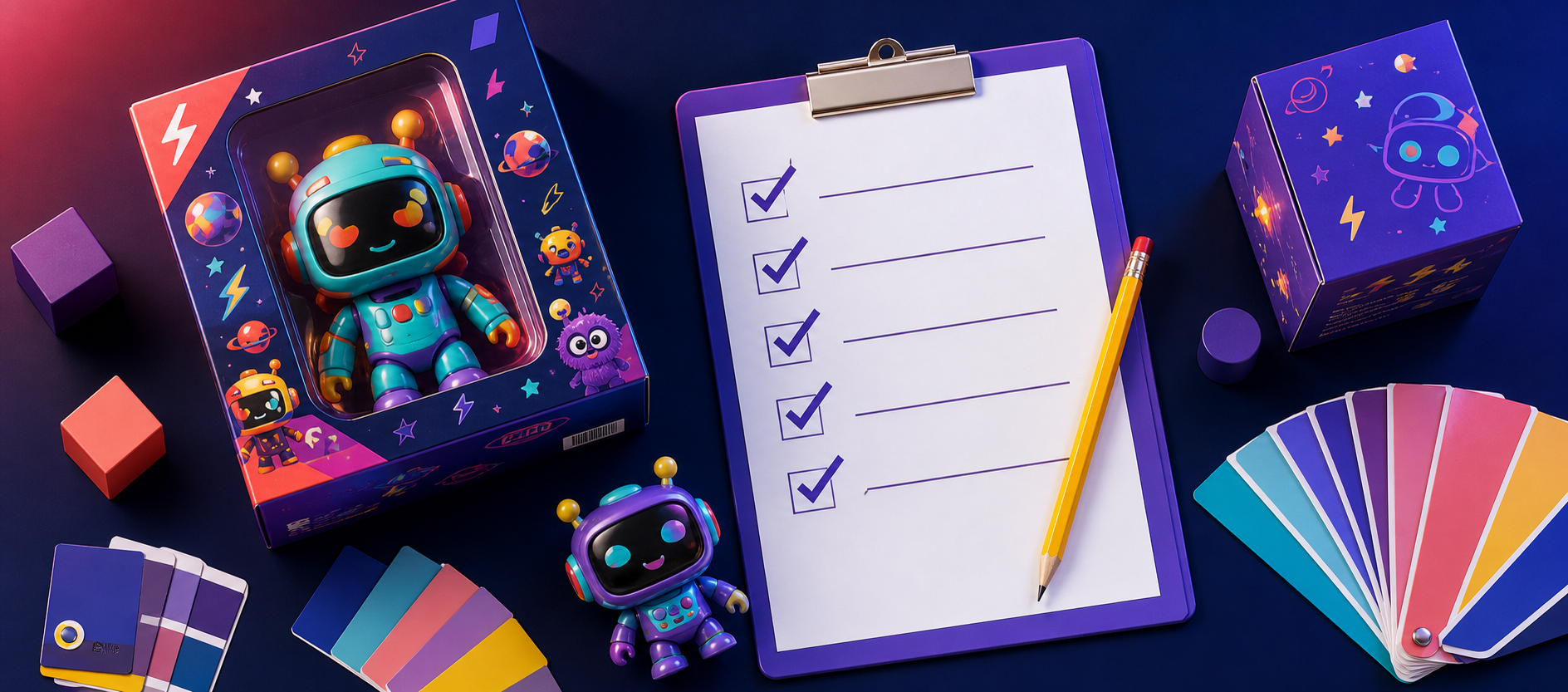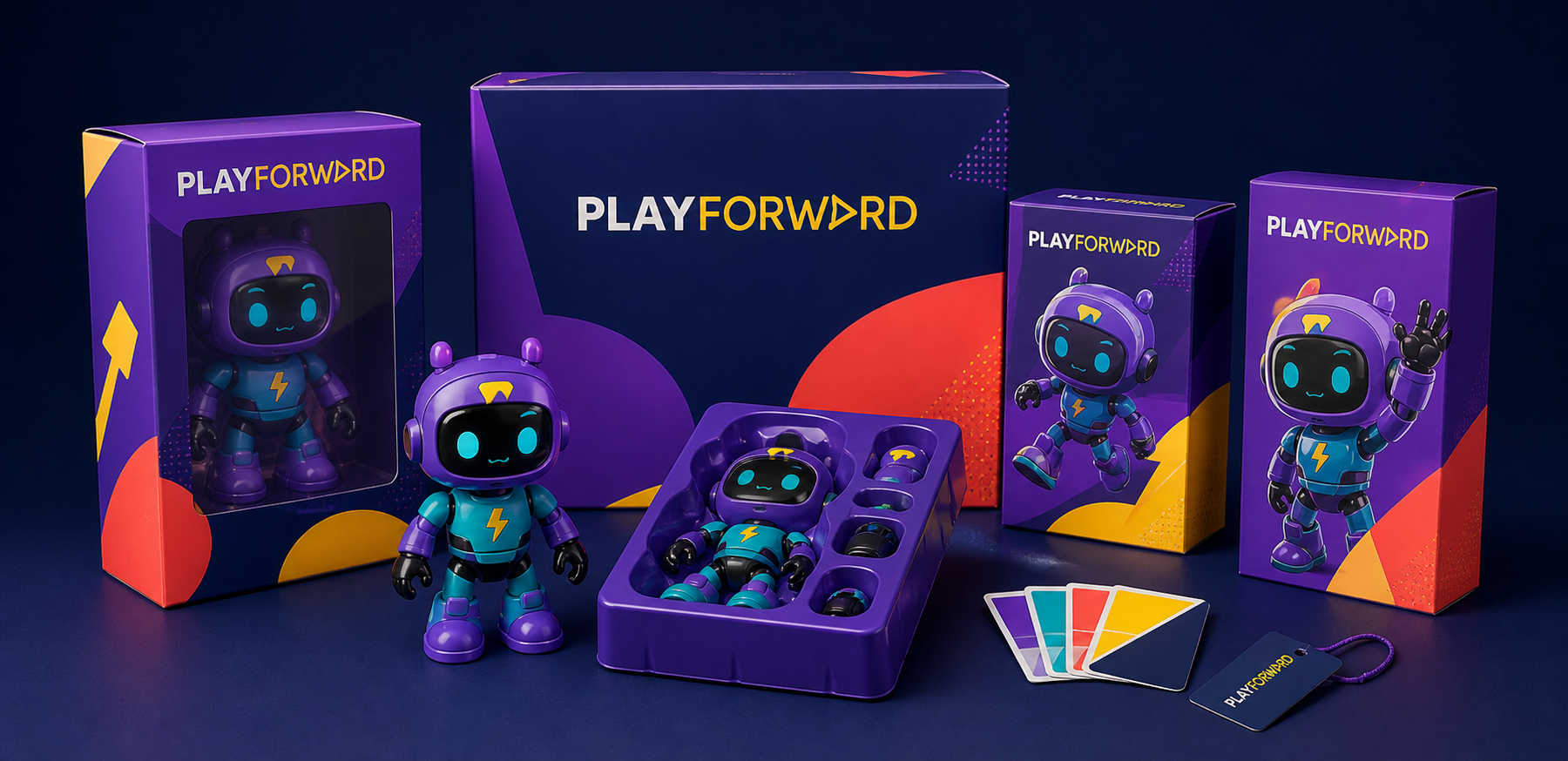
The direct answer
The most expensive packaging mistakes are rarely graphic-design mistakes. They happen when a box is approved before the product dimensions, warnings, inserts, barcode, carton configuration or retail display needs are confirmed.
01 / Buyer action
Start with the shelf decision
A buyer should decide what a shopper must understand in a few seconds: the product, play pattern, age position, contents and primary reason to choose it. That hierarchy should drive both the front panel and the unboxing experience.
- Write one short product promise before designing the front panel.
- Use clear product imagery that matches the actual contents.
- Avoid claims that cannot be supported by the final product or market documentation.
02 / Buyer action
Build mandatory information into the dieline
Warnings, traceability, importer details, instructions, barcode space and other required information should be planned before artwork is locked. Late additions can create poor legibility or force a new pack layout.
- Reserve a compliance and traceability zone on the pack.
- Confirm country, language and retailer copy needs early.
- Review warnings against the final age grade and product use.

03 / Buyer action
Match structural packaging to the product journey
The pack must protect the product during packing, warehouse handling, transport, shelf display and consumer opening. A beautiful concept that scuffs, collapses or exposes loose parts is not retail-ready.
- Test the actual product, inserts and fastenings in the selected structure.
- Review hanging, shelf, display-ready and e-commerce handling needs.
- Use packaging samples for both visual and practical approval.
04 / Buyer action
Control artwork revisions like product revisions
Packaging is part of the SKU specification. Version-controlled artwork prevents outdated warnings, barcodes or ingredients from reaching print. Every approved proof should map to the product and market it supports.
- Use a file-naming and revision system shared with the supplier.
- Record final approvals for copy, language and barcode data.
- Check printed goods against the approved proof before packing begins.
05 / Buyer action
Connect inner packs and cartons to the range plan
Carton configuration affects replenishment, freight, warehouse operations and retailer handling. It needs to be reviewed as part of the commercial plan, not as a supplier-side afterthought.
- Define unit, inner-pack and master-carton quantities.
- Confirm carton marks and barcode requirements.
- Check pack dimensions against shelving and e-commerce fulfillment assumptions.
Buyer FAQ
Common questions about toy packaging design
When should toy packaging design begin?
At the product-brief stage. Packaging choices affect size, protection, instructions, warnings, cost and logistics.
Can one package serve all markets?
Sometimes, but language, warnings, importer details and retailer needs may require market-specific versions. Confirm this before print approval.
Who approves toy packaging?
The buyer should define commercial and brand approvals, while responsible parties must confirm market-specific information for the final SKU.
External references
Official sources and further reading
Ready to act?