The direct answer
Quality planning begins by agreeing what good looks like. The buyer, supplier and inspector should share the same product reference, defect definitions, pack-out requirements and evidence format before the line begins.
01 / Buyer action
Create a critical-to-quality checklist
A quality checklist should focus on characteristics that matter to safety, function, appearance, packaging and retailer acceptance. Generic checklists are useful only when they are adapted to the actual SKU.
- Define critical, major and minor defect examples with photos.
- Include function, fit, assembly, color and decoration checks.
- Add product contents, packaging and carton verification points.
02 / Buyer action
Approve pre-production before scale-up
A pre-production sample verifies that product, materials, artwork and packaging can be made together under intended conditions. It is the best time to catch a mismatch before thousands of units repeat it.
- Compare the sample with the approved specification and artwork.
- Confirm the bill of materials and component sources.
- Record any conditional approvals with a responsible owner and date.
03 / Buyer action
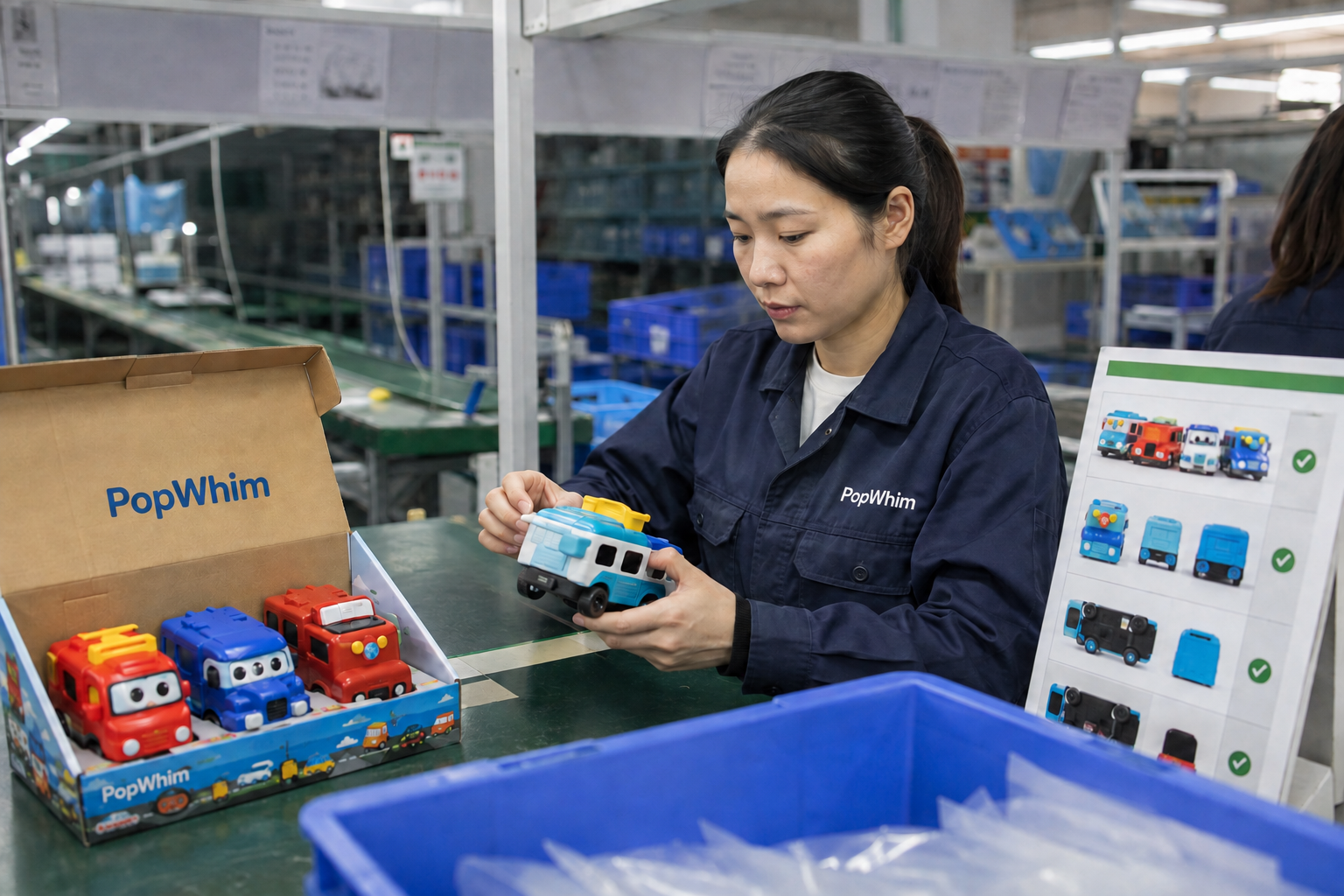
Use in-process checks to prevent repeat defects
In-process inspection identifies drift while corrective action is still practical. First-piece checks, line patrols and functional tests should feed back to the operators rather than sit in a report after the run.
- Check first-off units after setup or changeover.
- Monitor recurring assembly, decoration and functional points.
- Keep reject and rework records visible to production supervisors.
04 / Buyer action
Inspect finished goods against the order
Final inspection should include product quality, quantity, barcodes, packaging, carton marks and the final approved configuration. It must test the batch being released, not a showroom sample.
- Use an agreed sampling approach and defect classification.
- Open cartons from different production periods where possible.
- Verify accessories, instructions, inserts and pack-out.
05 / Buyer action
Make shipment release a documented decision
The final report should make it clear what was inspected, what was found, what was corrected and who authorized release. If a deviation is accepted, record it so the buyer and factory do not interpret it differently later.
- Attach photographs and lot or carton references.
- State unresolved findings and required corrective actions.
- Retain the approved sample and inspection record together.
Buyer FAQ
Common questions about toy quality control inspection
What should be checked during toy inspection?
Typical checks include workmanship, functionality, components, safety-relevant visible issues, packaging, labels, contents and cartons. The final list should be product-specific.
Is pre-shipment inspection enough?
It is valuable, but pre-production and in-process controls reduce the risk of discovering systemic problems only at the end.
Who sets acceptable defects?
The buyer and supplier should agree them in the quality specification before production, with special attention to safety and retailer requirements.
External references
Official sources and further reading
Ready to act?