The direct answer
Compliance planning works best when a buyer starts with the exact SKU—not a generic request for an EN 71 or ASTM report. A product-specific matrix makes the age grade, material list, play functions, warnings, market and test-sample configuration visible before production money is committed.
01 / Buyer action
Map the product before naming a standard
Testing scope follows product characteristics. A plush toy, sound-producing figure, chemistry kit, magnetic construction set and water toy can raise different mechanical, chemical, electrical, flammability or labeling questions.
- Record the intended age, play pattern and accessible components.
- List coatings, plastics, fillings, magnets, batteries, cords and attachments.
- Freeze the test sample configuration before sending it to a laboratory.
02 / Buyer action
Understand the EU route in practical terms
For toys placed on the EU market, the European Commission describes safety assessment, conformity assessment, technical documentation, declarations, marking, traceability and warnings as connected responsibilities. The applicable route must be confirmed for the final product and market.
- Keep the final bill of materials aligned with the reviewed sample.
- Build warning and traceability fields into packaging artwork early.
- Assign ownership for the technical file and market documentation.
03 / Buyer action
Understand the U.S. route in practical terms
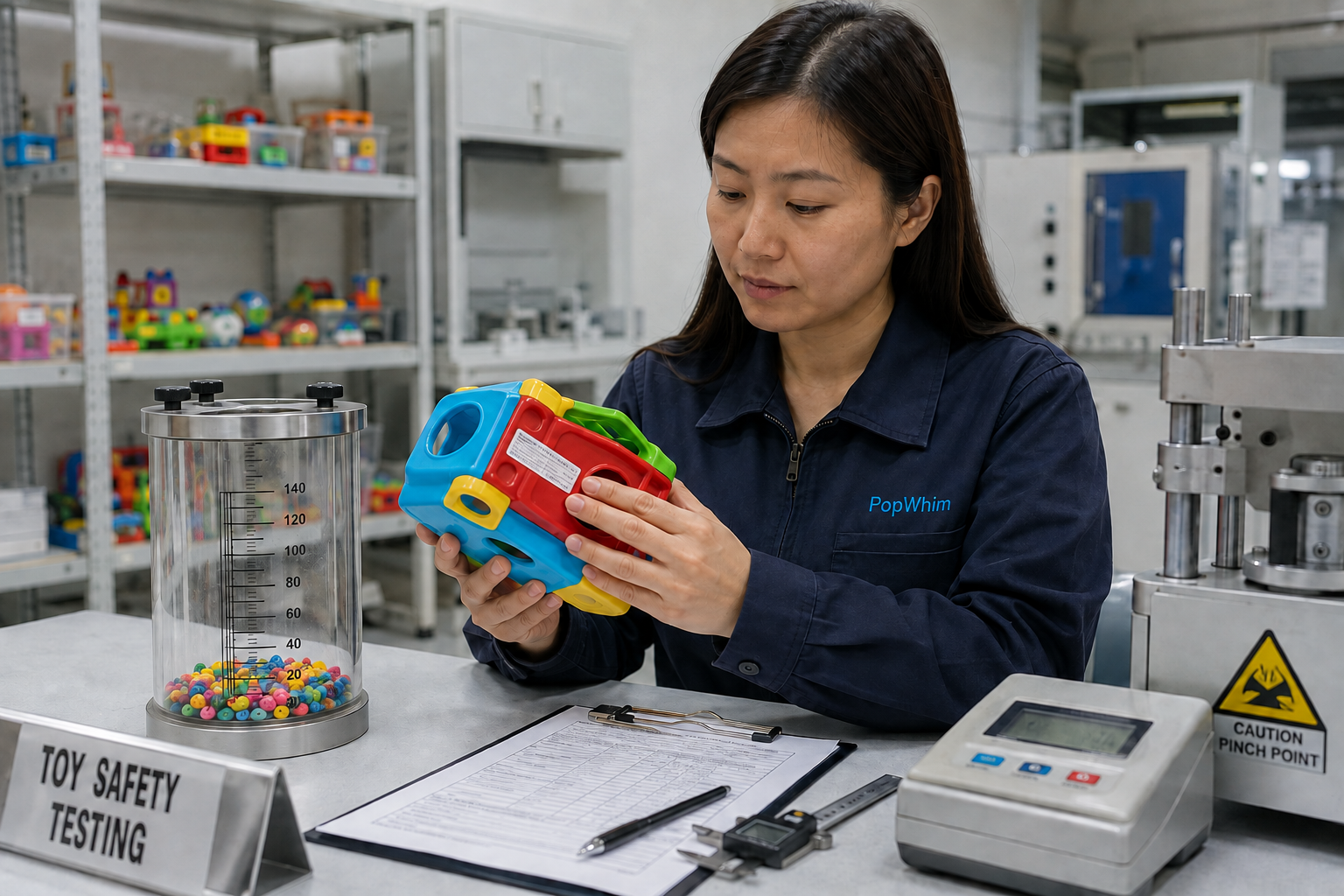
The CPSC explains that the applicable ASTM F963 sections depend on the toy, and that U.S. testing and certification obligations for children’s products require product-specific review. Do not assume every ASTM section applies to every item.
- Ask the laboratory to identify the proposed applicable sections.
- Confirm whether a production change affects the tested configuration.
- Keep records needed for the final certification and tracking decisions.
04 / Buyer action
Avoid the generic certificate mistake
A report only supports the sample and scope it actually covers. It cannot automatically validate a new colorant, supplier, age grade, accessory, warning, packaging configuration or product function introduced after testing.
- Match reports to model, components, age grade and production date.
- Use a change-control gate for materials, artwork and suppliers.
- Ask who reviews changes before shipment release.
05 / Buyer action
Build compliance into the production calendar
Testing should sit beside sampling, artwork and production planning. Waiting until final goods are ready makes corrective action slower because material, tooling, labels and carton work may already be locked.
- Schedule test samples before bulk material commitment where practical.
- Include test timing and retest contingencies in the launch plan.
- Retain approved references for production and shipment inspection.
Buyer FAQ
Common questions about toy safety testing requirements
Are EN 71 and ASTM F963 the same?
No. They sit in different regulatory and standards contexts. A buyer must determine the requirements for the actual product and destination market.
Do all toys need the same tests?
No. Test scope depends on features, materials, age grade and intended play. A qualified laboratory or adviser should review the specific product.
When should toy testing start?
Start during product development, before bulk production. That makes it easier to align the sample, materials, warnings and documentation.
External references
Official sources and further reading
Ready to act?