The direct answer
The best way to negotiate a useful toy MOQ is to simplify the first order without stripping out the product story. Buyers should understand which choices drive quantity: number of colors, custom components, packaging format, assortment mix and target delivery window.
01 / Buyer action
Ask what is driving the MOQ
A supplier should be able to explain the quantity constraint by process. Plastic color batching, fabric purchase, printed boxes, custom inserts, electronic components and manual assembly can each set a different practical minimum.
- Request MOQ by SKU, colorway, packaging version and order total.
- Separate existing-platform MOQ from fully customized MOQ.
- Ask whether the limit is material, production line or packaging related.
02 / Buyer action
Plan an assortment before negotiating one SKU
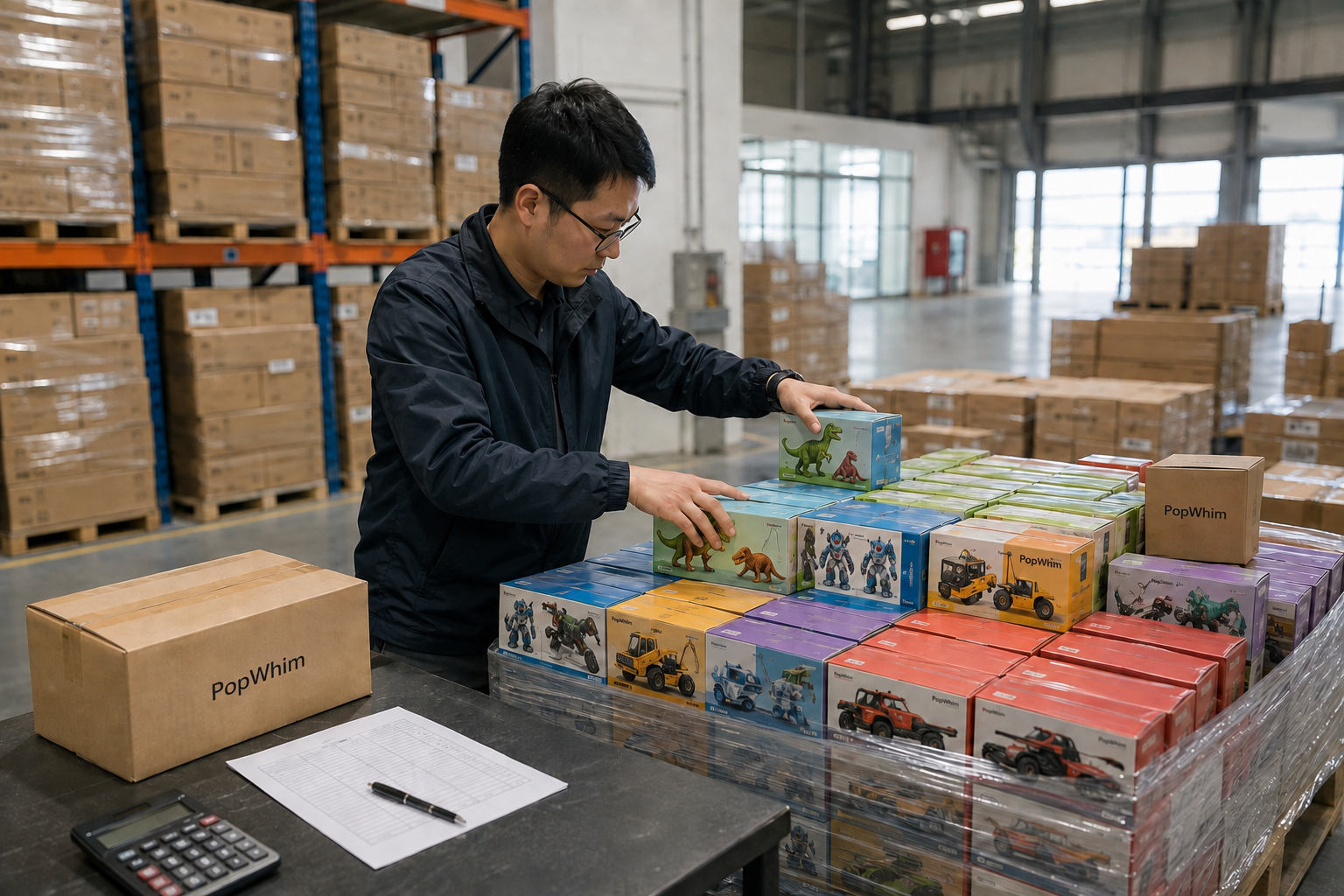
A retail range can often meet production logic more effectively by sharing components, packaging structures or color systems across several items. The goal is a coherent assortment, not a forced quantity on one slow-moving product.
- Use hero, supporting and add-on roles in the range.
- Reuse pack sizes or structural components where appropriate.
- Avoid adding variants that cannot earn a meaningful reorder.
03 / Buyer action
Reduce complexity before reducing quality
When a first order is below a supplier’s preferred run, simplify features that create separate batches rather than remove the core play value. A single box format or fewer colorways can have more impact than downgrading visible materials.
- Prioritize product safety and the central play proposition.
- Consolidate print versions and accessory combinations.
- Keep a roadmap for later range extensions.
04 / Buyer action
Use an MOQ discussion to test supplier transparency
A realistic supplier will show the trade-off between quantity, unit cost, tooling, lead time and customization. Be cautious when a low MOQ is offered without a clear explanation of what changes in the quote or process.
- Ask for two or three quantity scenarios using the same brief.
- Review tooling and one-time costs separately from unit cost.
- Confirm how the price changes if the mix shifts after approval.
05 / Buyer action
Protect cash flow with approval gates
Quantity decisions should follow a viable sample and commercial range plan. Committing to a large MOQ before product, packaging and compliance assumptions are validated creates avoidable inventory risk.
- Release deposits only against defined sample and artwork gates.
- Align carton quantities with warehouse and channel plans.
- Plan reorders from actual sell-through data when available.
Buyer FAQ
Common questions about toy MOQ
What is a normal MOQ for toys?
There is no universal figure. MOQ varies by product type, customization, materials, packaging, colorways and supplier process.
Can I get a lower MOQ for a first order?
Sometimes, especially by using existing components or packaging structures. Ask what needs to be simplified and what effect it has on cost and lead time.
Does a lower MOQ mean higher unit cost?
Often, but not always. A quote should show the reason rather than present MOQ as a fixed rule.
External references
Official sources and further reading
Ready to act?