The direct answer
For collectible designer toys, material and finish choices determine more than appearance. They affect sculpt fidelity, tactile feel, paint adhesion, seam visibility, accessory fit, transit resistance and the production controls required for a stable order. The final sample should demonstrate the exact combination being approved.
01 / Buyer action
Select the production route around the sculpt
The production route must suit the intended geometry and handling. Ask the supplier how the sculpt will be split, where seams will land, which parts need assembly and how the material behaves after cooling or curing. This is where an early engineering review protects the visible face, front surface and high-contact points from avoidable compromises.
- Mark non-negotiable sculpt areas on the approved drawing.
- Ask for an assembly and seam-location review.
- Check the first sample for distortion and visible joins.
02 / Buyer action
Specify surface finish in observable terms
Words such as “premium” or “smooth” are too broad for inspection. Define matte, satin or gloss level; color references; texture; paint edges; print placement; and the acceptable cosmetic range. For collectible designer toys, collectors often notice small differences around faces, logos and front-facing color boundaries, so these should be documented as critical surfaces.
- Approve finish under consistent neutral lighting.
- Use close-up reference photos for critical decoration.
- Classify allowable marks before mass production.
03 / Buyer action
Review durability through realistic handling
Handling differs between a display piece, a gift and a toy. Check rubbing, assembly, stability and package removal in the way the buyer expects the consumer to handle the product. If the final SKU is a toy, the applicable safety route should be assessed for the intended age, materials and functions rather than inferred from a visually similar item.
- Test repeated fitting and removal of accessories.
- Check paint rub and surface transfer on contact points.
- Record the intended age and use pattern in the brief.
04 / Buyer action
Control variation at production scale
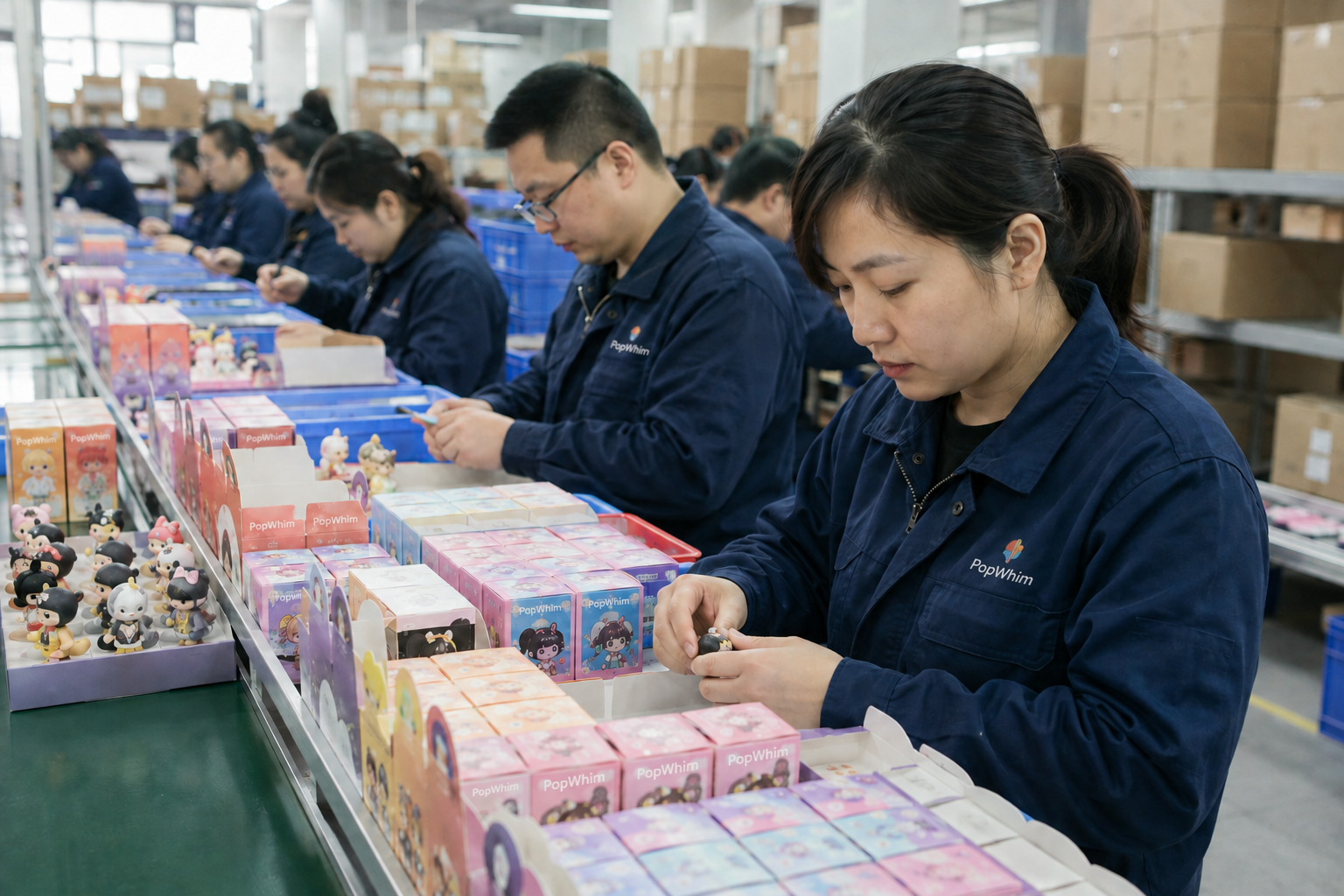
A sample can look consistent because it was made with extra attention. Mass production needs controls for pigment batches, paint masks, mold temperature, assembly fixtures and operator training. During factory testing, compare units from different positions in the run rather than approving only the first-off sample.
- Request in-process photos from relevant production stages.
- Check color and fit across multiple production units.
- Hold an approved reference at the factory and buyer side.
05 / Buyer action
Protect the finish through pack-out
The production choice is only successful if it arrives intact. Use inserts, bags, sleeves or separators that prevent paint-to-paint contact, deformation and accessory movement. Shipment inspection should test the final pack-out, not an empty carton, because the product, insert and transport route work as one system.
- Check protection around protruding or painted details.
- Verify accessory count and movement inside the package.
- Confirm final carton stacking and sealing instructions.
Buyer FAQ
Common questions about collectible designer toys materials and finish
What material detail matters most for collectible designer toys?
The important detail is how the selected material supports the sculpt, finish, handling and pack-out of the final approved SKU.
Can a sample guarantee production finish?
No. It is the reference point; production controls and inspection evidence are needed to verify repeatability.
Why do seams matter?
Their location and finish can affect perceived quality, especially on a face, front surface or highly visible silhouette.
External references
Official sources and further reading
Ready to act?